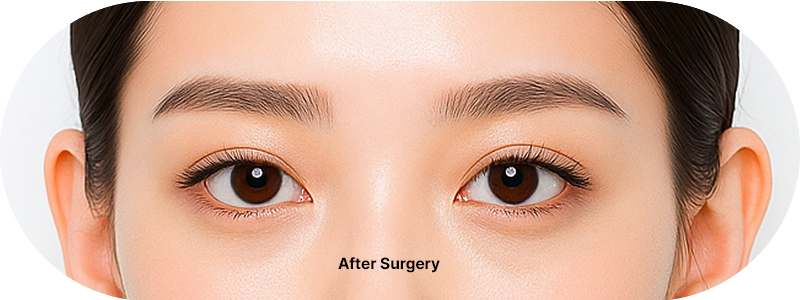
Ptosis Correction
“ Strengthen the eye-opening muscles for sharper, more defined eyes. ”
- What is Ptosis Correction?
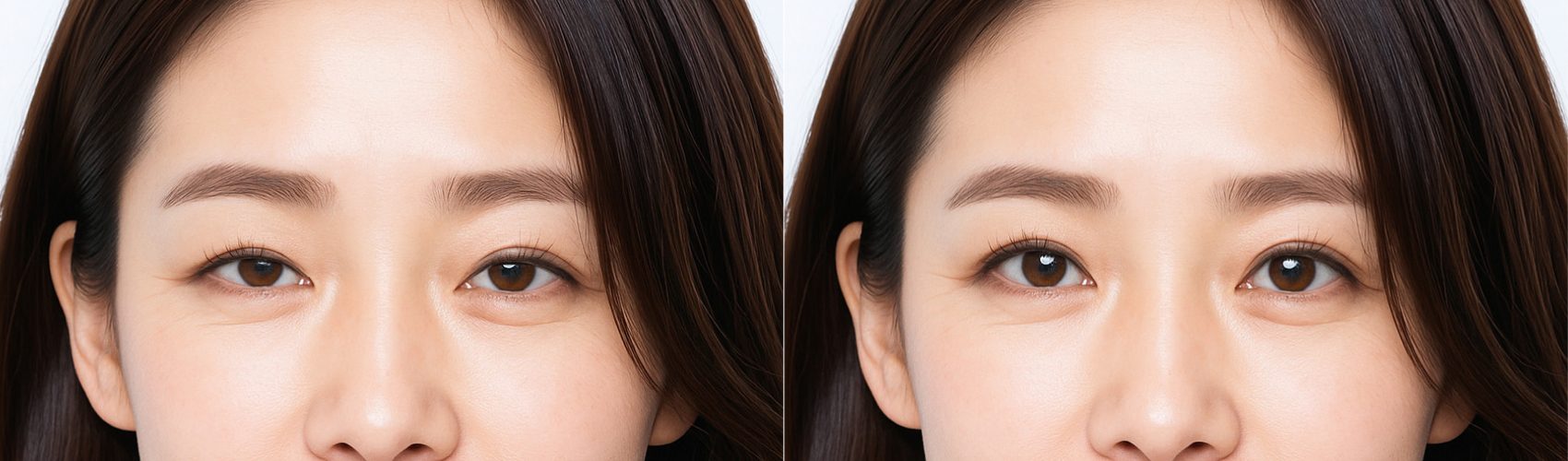
- When the eye-opening muscles are weak and cover a large portion of the iris, this condition is called ptosis. Ptosis Correction is a surgery that improves ptosis-related eyes — which look sleepy and heavy — making them appear larger and more defined.
Non-incisional Ptosis Correction
Incisional Ptosis Correction
Approx. 20 minutes
Surgery Time
Approx. 40 minutes
Mild
Degree of Ptosis
Moderate or above
Difficult
Fine Adjustment of Eye-opening Strength
Fine adjustment possible
Eyes with thin skin, thin muscle, and little fat
Eyelid Condition
Eyes with thick skin, thick muscle, and more fat
Minimal
Post-surgery Scarring
Similar to double eyelid scar
- Surgery Time
-
Incisional: Approx. 40 minutes
Non-incisional: Approx. 20 minutes
- Anesthesia
- Short-term Sedation Anesthesia
- Hospitalization
- Not Required
- Suture Removal
-
Incisional: 5 days
Non-incisional: Not required
- Follow-up Visit
- 1 visit
- Recovery Period
-
Incisional: 5 days
Incision : 2~3
*Results may vary depending on the patient's condition and surgical method.
- who
Ideal Candidates for Ptosis Correction
Ptosis Correction is recommended for the following candidates.
- ✓Those whose eyes appear sleepy
- ✓Those whose upper iris is largely covered, making eyes appear smaller
- ✓Those who still feel heaviness when opening eyes even when lifting the forehead skin
- ✓Those who still feel heaviness when opening eyes even after forehead/brow lift surgery
Non-incisional Ptosis Correction
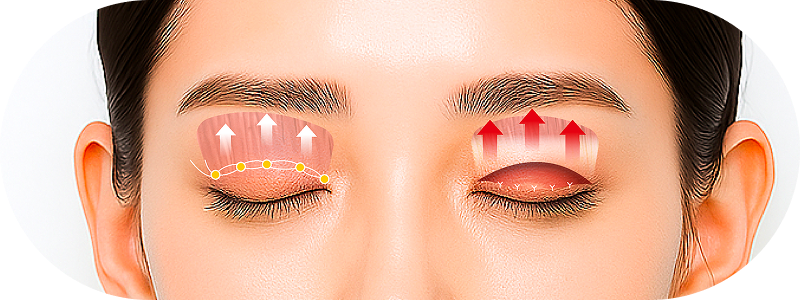
A surgery that strengthens the eye-opening muscles using sutures without any incision, improving eye-opening strength.
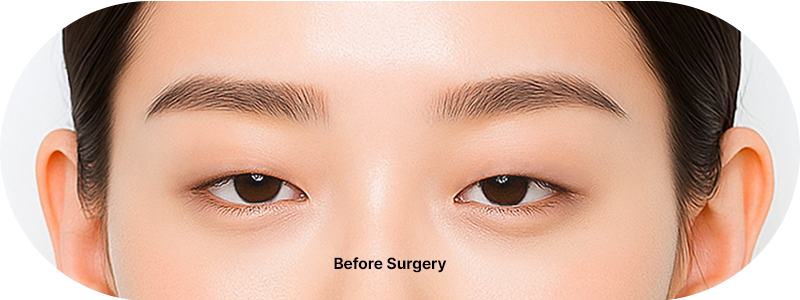
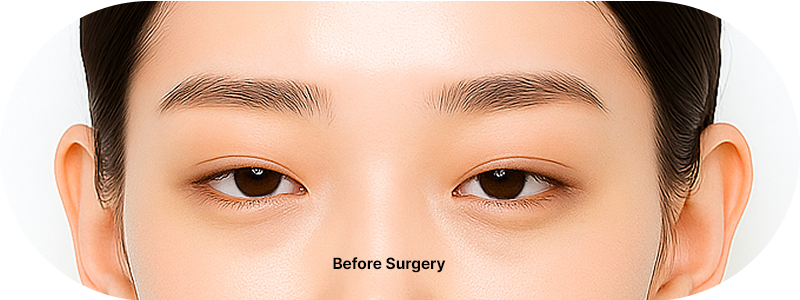
- 1. Before Surgery
- Eyes without double eyelids that appear sleepy due to weak eye-opening muscles
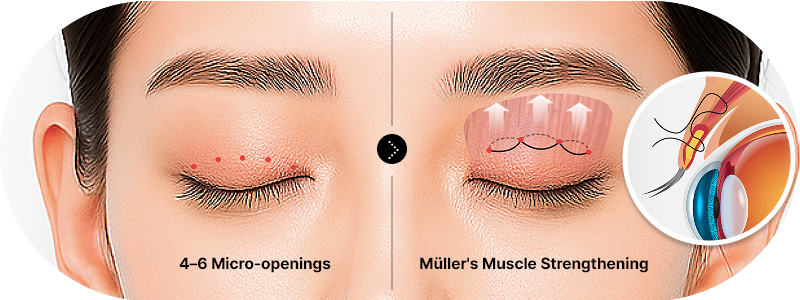
- 2. Micro-openings / Müller's Muscle Strengthening
- Following the design, 4–6 micro-openings are made and Müller's muscle is strengthened.
- 3. Knotting / Inducing Natural Adhesion
- The tarsal plate height is adjusted to create knots, guiding the skin and muscle to naturally adhere to the tarsal plate.
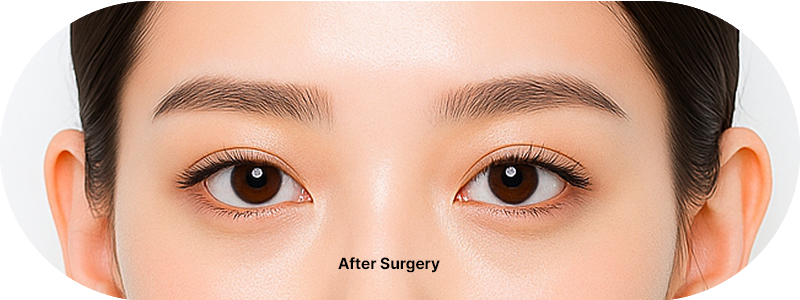
- 4. After Surgery
- The previously sleepy-looking eyes transform into bright, wide-open eyes.
Incisional Ptosis Correction
Incisional Ptosis Correction is required for cases needing precise correction or moderate-to-severe ptosis.
- 1. Before Surgery
- Eyes that appear sleepy due to weak eye-opening muscles
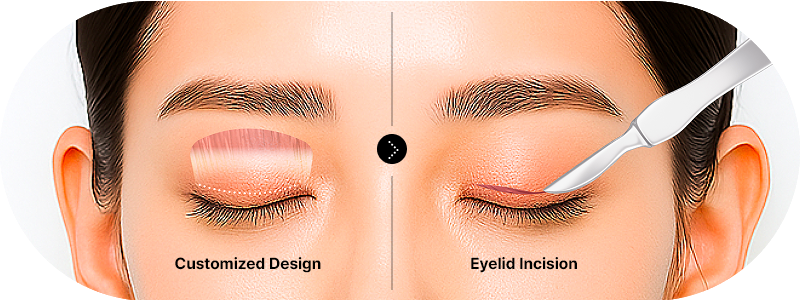
- 2. Customized Design / Incision
- After designing according to the facial image, the incision is made.
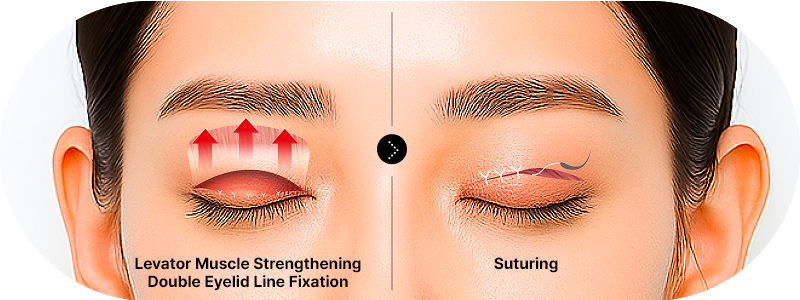
- 3. Levator Muscle Strengthening / Double Eyelid Line Fixation
- The levator palpebrae superioris muscle is strengthened, the double eyelid is fixed, and then sutured.
- 4. After Surgery
- The previously small and sleepy-looking eyes transform into large and defined eyes.
Surgical Benefits
 1
1
- Improvement to Sharp and Refreshing Eye Appearance
 2
2
- Strengthened eye-opening muscles make it much easier to open the eyes, improving quality of life.
 3
3
- Improvement of the habit of raising eyebrows to open eyes, preventing forehead wrinkles.
 4
4
- Transformation from a sleepy appearance to a bright and refreshing impression.
- before & after
- Before & After Photos
- Eyelid Correction
- Before & After Photos
Non-incisional Double Eyelid Surgery · Eyelid Correction · Canthoplasty
Incisional Monolid Correction
Incisional Double Eyelid Surgery · Eyelid Correction
Incisional Monolid Correction · Lower Eyebag Fat Repositioning
Incisional Monolid Correction
4-in-2 Endoscopic Forehead Lift · Eyelid Correction
Upper Blepharoplasty · Lower Blepharoplasty · Eyelid Correction
4-in-2 Endoscopic Forehead Lift · Eyelid Correction
4-in-2 Endoscopic Forehead Lift · Lower Blepharoplasty · Eyelid Correction
Sub-brow Lift · Upper Blepharoplasty · Lower Blepharoplasty · Eyelid Correction
Upper Blepharoplasty · Eyelid Correction
Upper Blepharoplasty · Eyelid Correction
Recovery time may vary by individual after surgery, and side effects such as bleeding, infection, and inflammation may occur.