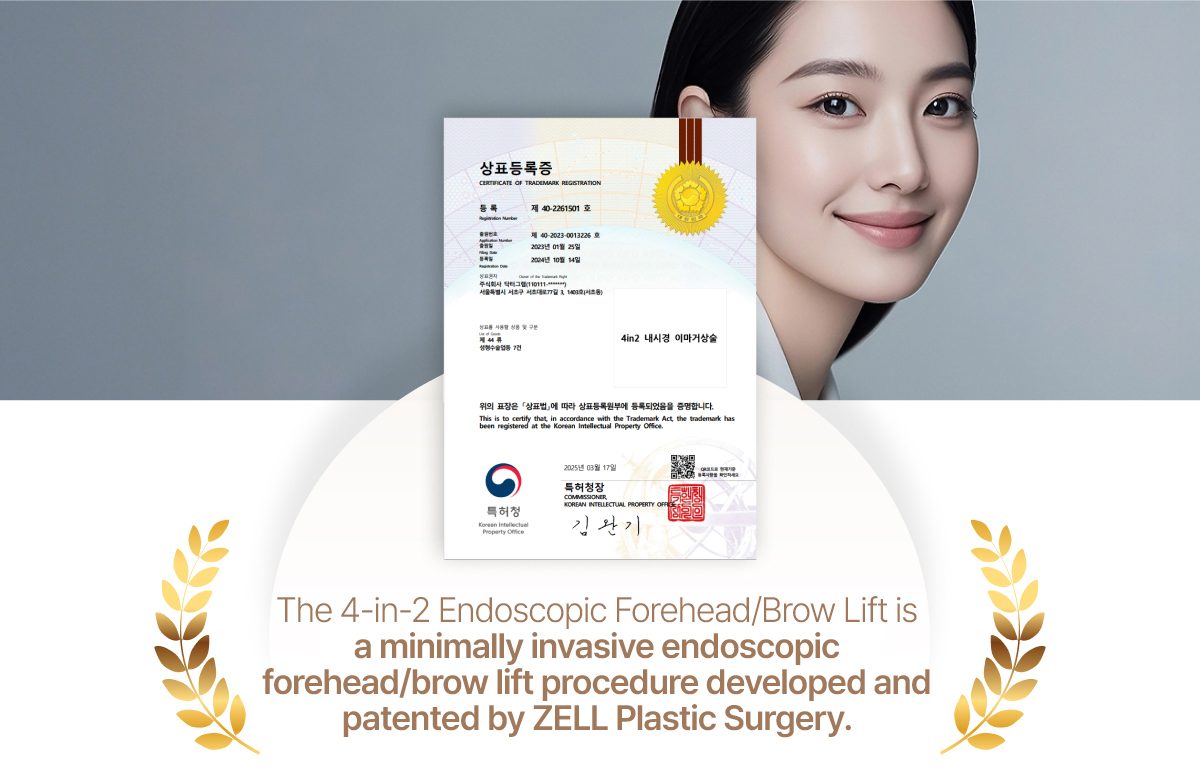
4-in-2 Endoscopic Forehead/Brow Lift
“ Minimal Incision, Maximum Results — Revolutionary forehead/brow lift ”
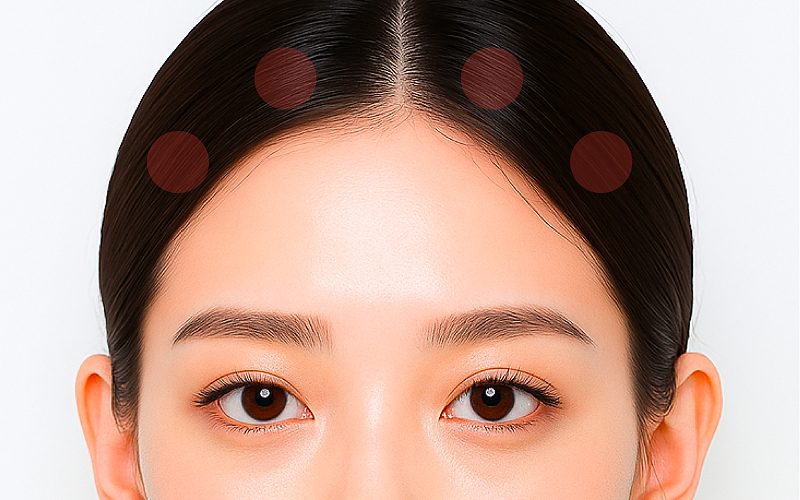
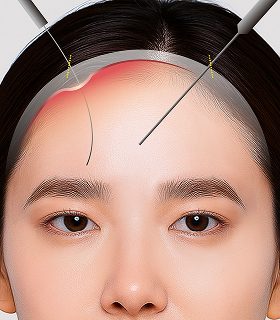
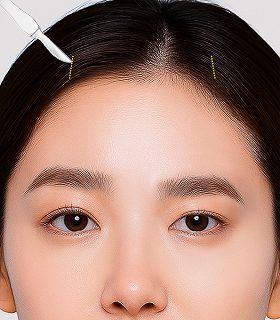
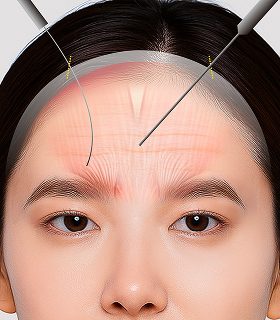
This innovative technique achieves a full forehead/brow lift effect through just two hairline incision points, ensuring both safety and efficacy with precise endoscopic surgery.
Compared to conventional forehead/brow lifts, the number of incision points is minimized to reduce concerns about scarring and hair loss.
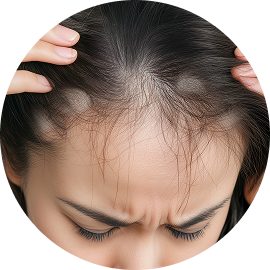
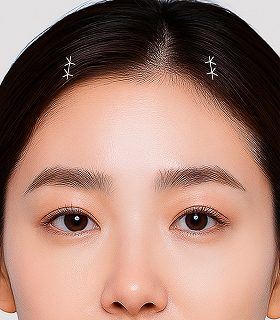
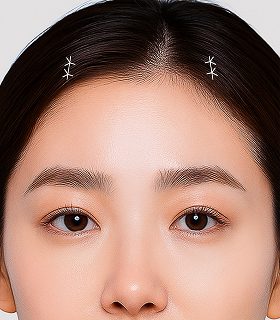
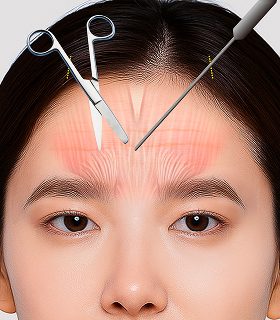
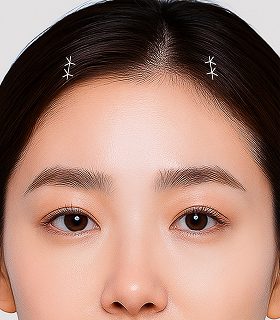
With only two incisions of 1.5–2 cm hidden within the hair, scars are virtually invisible. Even for those with thin hair or baldness, the scars remain inconspicuous.
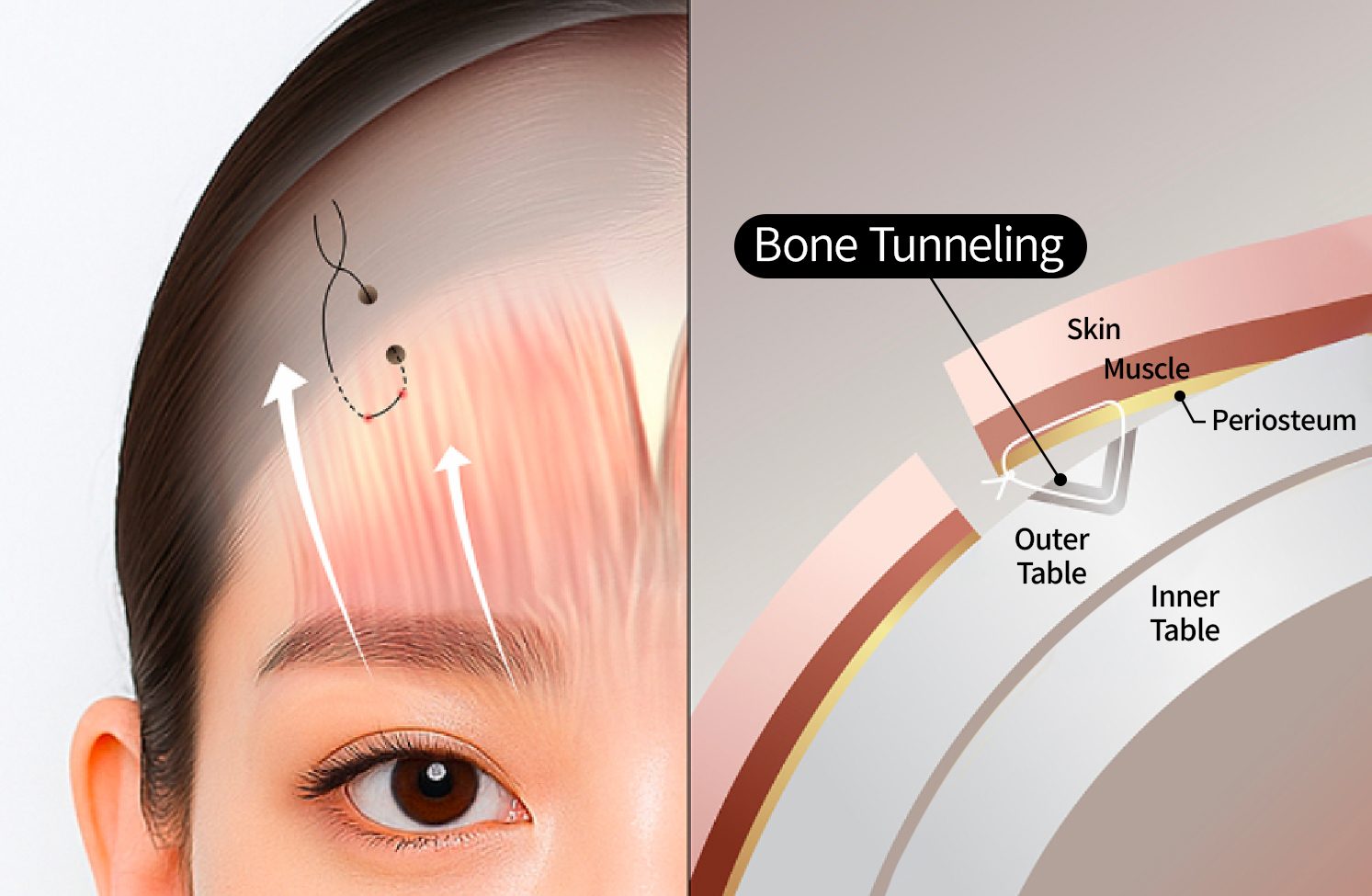
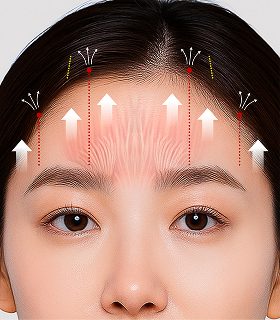
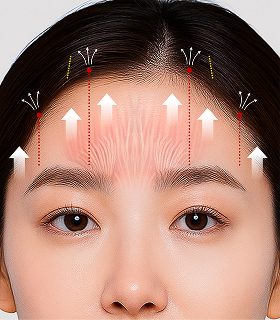
With 4-point precision fixation, not only the center of the forehead but also the temples and lateral areas are lifted, delivering stable and consistent results.
- Surgery Duration
- Approx. 1 hour
- Anesthesia
- IV Sedation
- Hospitalization
- Not Required
- Suture Removal
- After 7 days
- Follow-up Visits
- 1 time
- Recovery Period
- 7 days
*Results may vary depending on the patient's condition and surgical method.
- key point
Key Differentiators
With 2-point minimal incisions to minimize scarring and hair loss concerns, and 4-point precise fixation for a more stable and satisfying forehead/brow lift result.
- 12-Point Minimal Incision
- Barely visible even with sutures in place. After 3 months, even your regular hairdresser won't notice. After 6 months, even we have difficulty finding them. In fact, many patients come to ZELL Plastic Surgery after being referred by their hairdresser.
- 24-Point Precision Fixation
- At ZELL Plastic Surgery, we perform 4-point precision fixation. When done accurately, the fixation is strong and can cover the temples and lateral areas as well. In addition, by adjusting the 4 fixation points, we can correct eyebrow asymmetry and customize the eyebrow shape to each individual's needs.
- 3Safe & Wide-Field Endoscopic Dissection
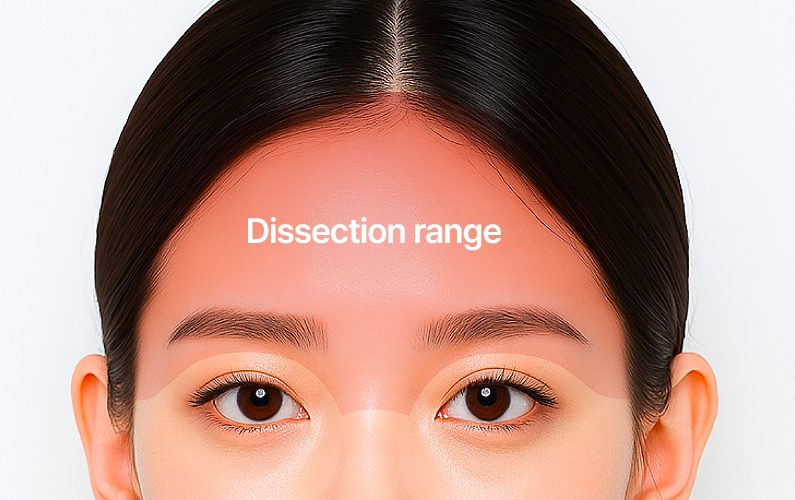
- The surgery is performed safely under direct visualization of nerves and blood vessels using a high-resolution endoscope. Due to the sufficient length of the endoscopic equipment and surgical instruments, extensive dissection covering the entire forehead, below the brows, glabella, temples, and temporal areas is possible.
- 4Elimination of Root Causes of Recurrence
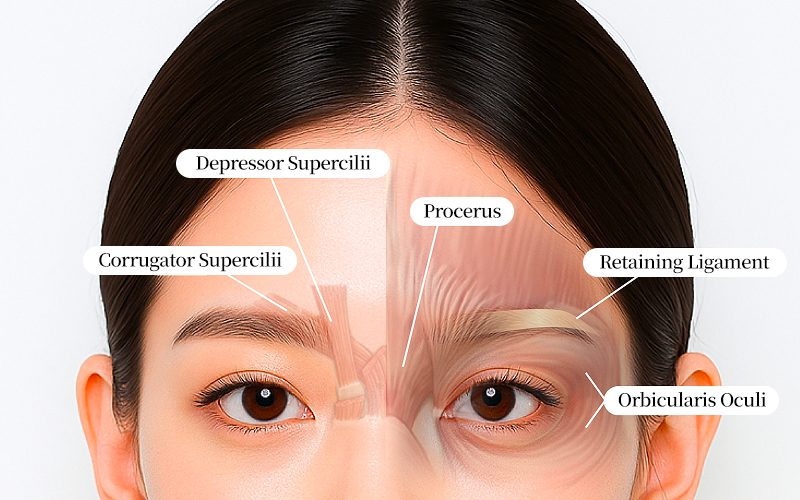
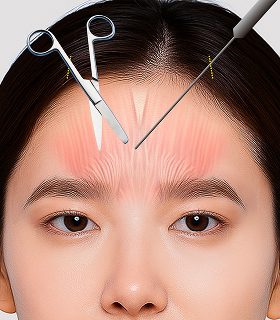
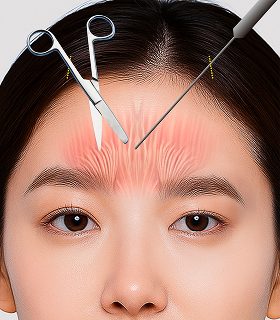
- The corrugator supercilii, the primary cause of forehead and eyebrow sagging recurrence, is resected. The depressor supercilii, procerus, and orbicularis oculi are released, and the retaining ligaments around the eyes are thoroughly dissected. As a result, the lifted forehead does not sag again and adheres firmly in the fixed position.
- 5Bone Tunneling Technique
- The dissected frontalis muscle and periosteum are directly fixed to the bone using absorbable sutures. Even before the sutures are absorbed, only the knot remains, resulting in minimal foreign body sensation. By using a specially crafted needle to grip a wide area of the frontalis muscle and periosteum, fixation stronger than implant devices (e.g., Endotine) can be achieved.
- who
Ideal Candidates for 4-in-2 Endoscopic Forehead/Brow Lift
- Concerns About Incisions
- Those who hesitate to undergo a conventional 3–5 incision endoscopic forehead/brow lift due to concerns about incisions, scarring, or hair loss
- Drooping Eyes
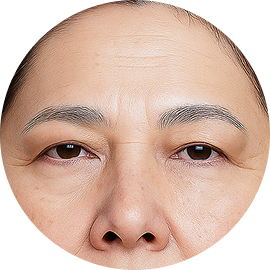
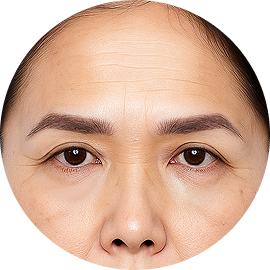
- Those with drooping eyes who are concerned that eyelid surgery alone may result in a harsher appearance
- Forehead & Glabellar Wrinkles
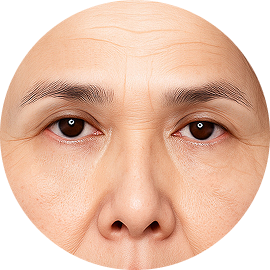
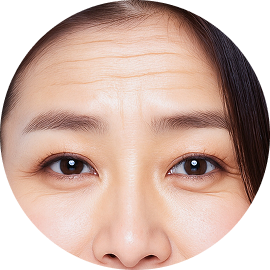
- Those with forehead or glabellar wrinkles who overuse forehead and frown muscles when opening their eyes
- Buried Double Eyelid Crease
- Those whose double eyelid crease is buried due to a short distance between the eyes and brows, even after double eyelid surgery
- Thick Upper Eyelids
- Those who wish to slim down a thick upper eyelid caused by a short distance between the eyes and brows
- Harsh Appearance
- Those who want to soften a fierce appearance caused by a short gap between the eyes and brows
- Tired or Heavy Appearance
- Those who want a more open, refreshed look due to a stuffy appearance caused by a close distance between the eyes and brows
- Eyebrow Asymmetry
- Those who wish to correct asymmetry between the left and right eyebrows
- Eyebrow Angle
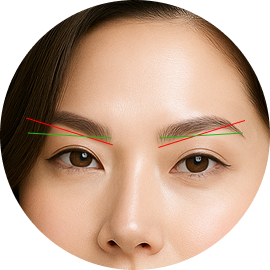
- Those who want to adjust the angle of their eyebrows
FULL HD Endoscope
ZELL Plastic Surgery's 4-in-2 Endoscopic Forehead/Brow Lift uses a Full HD endoscope without any foreign materials, safely improving sagging brows and forehead wrinkles.
By utilizing the endoscope to minimize damage to existing tissue, precise surgery is possible, resulting in excellent outcomes and a faster recovery.
General Case
- 2-point minimal incision on the scalp
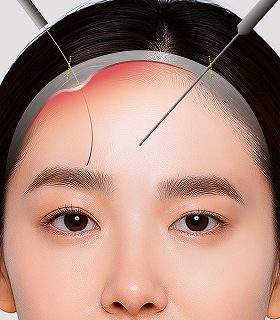
- Delicate dissection with endoscope
- Resect the corrugator supercilii and release other eyebrow depressor muscles
- 4-point fixation using bone tunneling suture technique
- Suturing
Eyebrow Asymmetry Correction
- 2-point minimal incision on the scalp
- More extensive dissection on the side requiring greater correction
- Further resection of the corrugator and additional release of other depressor muscles on the side needing more correction
- More periosteum and muscle movement and fixation on the side requiring greater eyebrow correction
- Suturing
Deep Forehead Wrinkle Correction
- 2-point minimal incision on the scalp
- Standard subperiosteal dissection with additional subcutaneous dissection at deep wrinkle sites
- Resect the corrugator supercilii and release other eyebrow depressor muscles
- 4-point fixation using bone tunneling suture technique
- Suturing
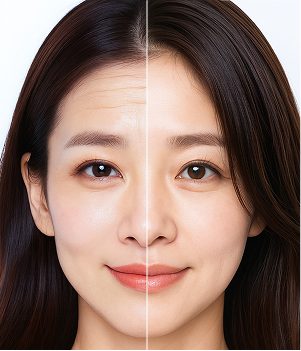
Surgical Results
 1
1
- Improvement of Upper Facial Aging
- By simultaneously improving forehead, eyebrow, and eyelid sagging, the drooping of the upper facial area is fundamentally corrected.
 2
2
- Improved Facial Impression
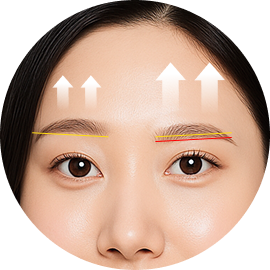
- By improving the narrow gap between the eyes and eyebrows, a soft and youthful impression is achieved.
 3
3
- Wrinkle Improvement
- The muscles causing glabellar wrinkles are weakened, eye opening becomes easier, reducing overuse of forehead muscles and improving forehead lines.
 4
4
- Eyebrow Position & Angle Correction
- Left-right asymmetry or the angle of the eyebrows is corrected to the desired shape.
 5
5
- Scar Minimization & Long-lasting Results
- With 2-point minimal incision and 4-point precision fixation, the burden of scarring and hair loss is reduced, while extensive dissection and precise fixation ensure long-lasting results.
- Q1.Is it true that with only 2 incisions, proper dissection of the temples and lateral areas cannot be performed?
-
A.
No. Because the endoscopic equipment and specially designed surgical instruments are sufficiently long, extensive dissection of the temples and lateral areas is possible with just 2 incisions.
- Q2.Is it true that with only 2 incisions, fixation is limited to 2 points, resulting in weak fixation and no lateral fixation?
-
A.
No. Incisions are made in the skin, while fixation is performed on the frontal bone — these are entirely different layers. Since the endoscope is used to fully dissect the frontal bone, fixation can be performed at as many points as needed. At ZELL Plastic Surgery, we fix at 4 points, and if done accurately, the fixation is strong enough to cover the temples and lateral areas as well.
- Q3.Is a drain (JP drain) necessary after forehead/brow lift surgery?
-
A.
No. If the periosteum is dissected cleanly without damage, there is minimal bleeding during surgery, making a drain unnecessary.
- Q4.Does forehead/brow lift surgery always cause headaches or nausea?
-
A.
No. Most patients do not experience these symptoms, and they occur very rarely. While individual constitution plays a role, accurate dissection during surgery minimizes unnecessary tissue damage, thus reducing the likelihood of headaches or nausea.
- Q5.Does the fixation method affect the duration of results?
-
A.
No. Fixation becomes functionally unnecessary about 2–3 months after surgery. After that, the results are maintained by the adhesion formed between the periosteum and the frontal bone. That is why our clinic uses absorbable sutures for fixation. The same reason other clinics use absorbable implant devices. Rather, the duration of results is related to how effectively the downward pulling forces on the forehead and brows have been released through procedures such as corrugator resection.